
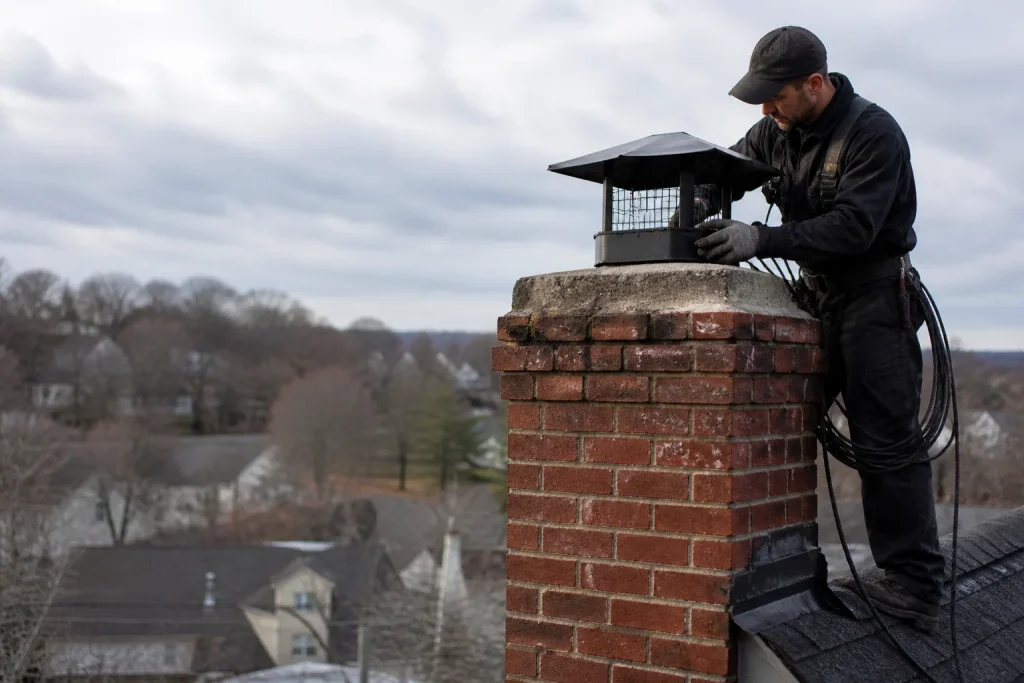
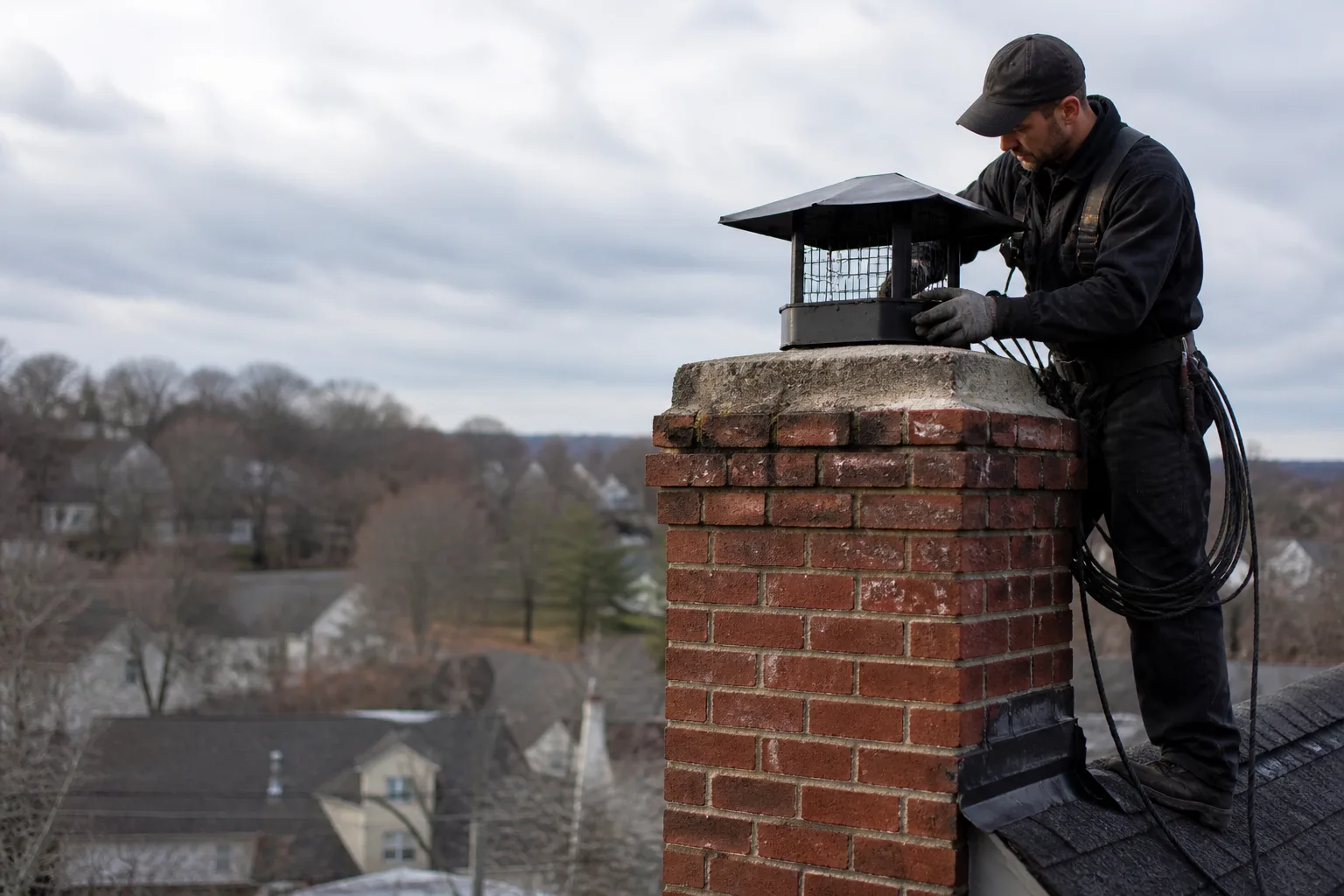
Emergency Chimney Sweep Near Me: What Suffolk Homeowners Should Do First
If you’re searching “emergency chimney sweep near me” right now, the most useful thing to do before you call anyone is put out the fire. A sweep can’t safely work in a hot flue, and some situations call for the fire department, not a chimney technician. What follows is a clear-headed protocol for the first 30 minutes, so you act on facts instead of fear.
Key takeaways
- Active chimney fire? Call 911 first, get everyone out, then worry about the sweep.
- Going-out fire, CO alarm, or heavy smoke rollback? Stop burning and ventilate before anything else.
- Animal in the flue? Don’t light a fire. Book a sweep for the same week, not the same night.
- A technician can’t safely work a flue that’s still hot. Overnight, you get advice and a plan, not a brushed chimney.
If you’d rather not sort through it alone, call us at (866) 361-9861. We answer 24/7, and fast dispatch runs 7am to 7pm, Sunday through Friday.
What Actually Counts as a Chimney Emergency in Suffolk?
A chimney emergency is a situation with active fire, a real carbon monoxide risk, or a blocked flue you can’t safely clear. Everything else is urgent-but-not-emergency, and waiting for a scheduled appointment in Suffolk is the smart move.
We’ve taken enough panicked calls to know that the word “emergency” gets attached to a lot of things that aren’t one. A smoky fireplace on a damp evening, a draft that pushes ash into the room, a bird that found the flue cap – all of these feel alarming at 10pm. None of them require a technician in your driveway before sunrise.
Here’s how we sort it:
- True emergency: an active chimney fire, a carbon monoxide alarm going off, or flames or smoke where they don’t belong. Call 911 first.
- Same-day urgent: heavy smoke rolling back into the room, a strong creosote smell with no fire lit, or a flue that’s clearly blocked. Stop using the fireplace and get it assessed.
- Same-week: an animal or nest in the flue, a cracked crown, visible masonry damage, or a failed inspection during a home sale. Important, but you can schedule it calmly.
Sorting your situation into one of those three buckets is the single most useful thing you can do before dialing. It tells you whether to call 911, call a sweep, or simply close the damper and go to bed.
How Do You Know If You Have an Active Chimney Fire?
An active chimney fire is an emergency: call 911, get everyone outside, and don’t try to fight it yourself. The signs include loud popping or roaring from the flue, dense smoke, and intense heat radiating from the chimney pipe or surrounding masonry.
Chimney fires don’t always look like a fire. Many burn hot and fast with a sound people describe as a low rumble or a freight train. Others smolder quietly and leave obvious damage behind. During a suspected active fire in Suffolk, here’s what to do:
- Call 911 and get everyone out of the house.
- Close the glass doors or damper if you can do it safely, which limits oxygen to the fire.
- Don’t throw water into the firebox. It can crack masonry or send steam and debris back at you.
- Wait for the fire department. Don’t re-enter to check on anything.
After the fire department clears the scene, the chimney needs an inspection before it’s used again. Heat can crack clay tiles, warp a metal liner, or damage the crown. That’s a job for a specialist, and it’s the point where an inspection-first approach matters most – we look before we recommend anything, so you know exactly what the fire did and what, if anything, needs fixing.
Why Can’t a Sweep Just Come Tonight?
No reputable sweep can safely brush a flue that’s been burning recently. The flue stays hot for hours after the fire is out, and both the heat and the loose creosote make the work dangerous. A legitimate emergency call gets you advice and a plan the same night, with the actual sweep scheduled once the flue has cooled.
Picture a technician trying to work a flue that’s still radiating heat. The brush, the rods, the ladder, the access – none of it is safe to handle while the chimney is still warm, and forcing the issue risks a burn injury or worse. There’s also the creosote itself: disturbed while hot, it can reignite.
What a real emergency call typically includes:
- A phone conversation to sort out what’s happening and whether 911 is needed.
- Guidance on stopping the fire, ventilating the room, and keeping the house safe overnight.
- A booked appointment for the sweep and inspection as soon as the flue is cool enough to work.
That’s why some companies advertising “24/7” are really offering phone advice and inspection scheduling, not same-night sweeping. We’re straight about that, because a company promising to brush a hot flue is telling you something about its standards. Our phones are answered 24/7, and dispatch runs 7am to 7pm, Sunday through Friday. If a fire fails on a Saturday, we’re closed that day and will book you for Sunday.
What About a CO Alarm or Smoke Rolling Into the Room?
A carbon monoxide alarm going off is a get-out-first situation: evacuate, call 911, and only then think about the chimney. Heavy smoke rollback is less urgent but still a stop-burning-now signal, because it means the flue isn’t drawing the way it should.
Homeowners often connect CO to furnaces and water heaters, not fireplaces. But a partial flue blockage – a nest, a collapsed liner section, a heavy creosote load – can route combustion gases into living space without producing any visible smoke at all. That’s the pathway people miss. If your CO alarm sounds and you’ve been burning wood, treat it as a chimney issue until a professional proves otherwise.
Heavy smoke rollback is easier to spot: smoke spilling from the firebox into the room instead of going up. It can come from a cold flue, a closed or partly closed damper, a blockage, or a flue that’s simply undersized for the appliance. Stop burning, open a window to ventilate, and get the flue inspected before the next fire. A carbon monoxide risk is never something to shrug off, and it’s never something to self-diagnose with a flashlight and hope.
What If an Animal Is Stuck in the Chimney?
For an animal in the flue, the rule is simple: don’t light a fire. Close the damper, keep the firebox doors shut, and schedule a sweep for the same week. Birds, squirrels and raccoons find their way into Suffolk chimneys regularly, and a fire is the worst possible response.
An animal blockage is unpleasant but rarely an emergency. It becomes urgent if you smell smoke indoors with no fire lit, or if the animal has died and left an odor that’s working its way into the house. Either way, the fix is a sweep who can remove the blockage and check the flue for damage before you burn again. A proper cap on the chimney is the long-term answer, and it’s a small repair compared to what a blocked, smoking flue can cost you.
When to Call a Pro (and When to Just Book a Sweep)
Call a pro the same day if you’ve had a chimney fire, a CO alarm, or heavy smoke rollback. For everything else – a home-sale inspection flag, a draft problem, visible cracking, or a routine annual cleaning – a scheduled chimney sweep is the right move, and it’s cheaper and calmer than an emergency call.
Once you know what you’re dealing with, here’s the pattern we see most often in Suffolk. An annual sweep catches small problems before they become emergencies. The technician brushes the flue, runs an inspection, and gives you a photo report of what’s actually there. If something’s off – a deteriorating mortar joint, a cracked tile, a liner that needs attention – you hear about it with evidence, not a sales pitch. A chimney repair follows only when the inspection shows it’s needed, and some findings can safely wait until the next season.
That’s where the right materials matter. HeatShield is the product we reach for when a flue needs its mortar joints restored without a full liner replacement, and DuraFlex flexible liners handle the offset and aged flue configurations that rigid liners can’t navigate. Trade-grade systems like these are the difference between a fix that lasts and a patch that doesn’t.
If you’d rather have a specialist look than guess, we’re Chimney Sweep Suffolk, and we handle sweeping, inspection and repair as one service so nothing falls through the cracks. For a broader look at the area, see our Suffolk page.
The Bottom Line
Most chimney “emergencies” that send people searching at night fall into two groups: a genuine safety event that needs 911, or a manageable problem that needs a scheduled sweep once the flue has cooled. Put out the fire, ventilate, get everyone safe, and then make the call with a clear head. A hot flue can’t be swept safely, and a company that tells you otherwise is telling you something.
If you’re in Suffolk and need help, Chimney Sweep Suffolk offers free estimates. Our technicians have up to 12 years of experience, and we inspect before we recommend, so nothing gets fixed on a guess. Call (866) 361-9861. We answer 24/7. Fast dispatch from 7am to 7pm, Sunday through Friday.
Frequently Asked Questions
A standard chimney sweep is priced per job by a free written estimate, and the estimate sets the final price before any work begins. Call (866) 361-9861 for an exact quote – estimates are free.
No. A flue that’s been burning stays too hot to work safely, so an overnight call gets you advice, safety guidance, and a booked appointment once the flue has cooled. We answer 24/7, and fast dispatch runs 7am to 7pm, Sunday through Friday.
Once a year for most wood-burning fireplaces, inserts and stoves, and more often if you burn heavily or notice draft problems. An annual sweep is what keeps a routine cleaning from turning into a same-week repair.
Creosote builds up, draft gets worse, and a blocked or restricted flue can push carbon monoxide into your living space. Skipping a year isn’t automatically dangerous, but skipping several raises the risk, and a CO alarm means it’s time to act. Call (866) 361-9861 to book an inspection.
Written by the team at Chimney Sweep Suffolk.
Need Chimney Cleaning Help?
Call Chimney Sweep Suffolk - licensed & insured, with free written estimates in Suffolk.
(866) 361-9861